Product Specifications

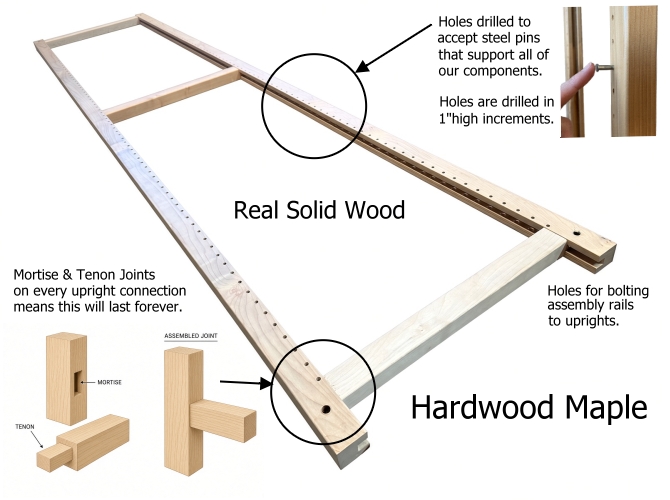
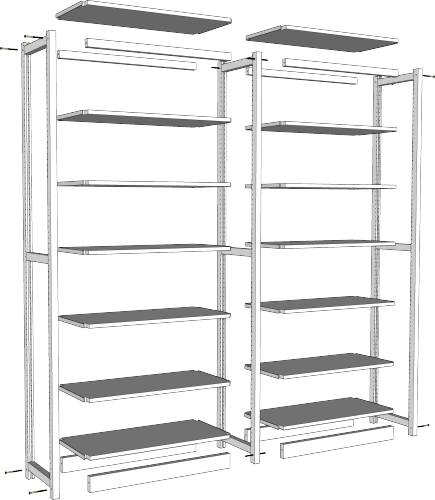
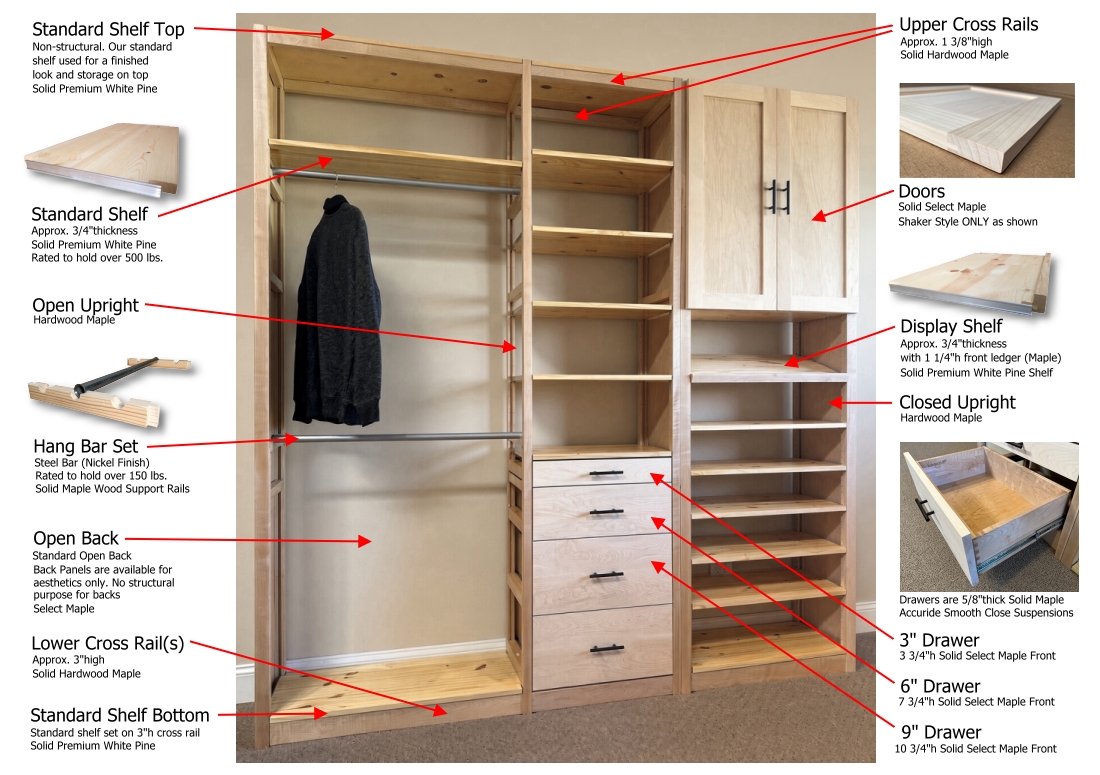
Product Specifications Diagram

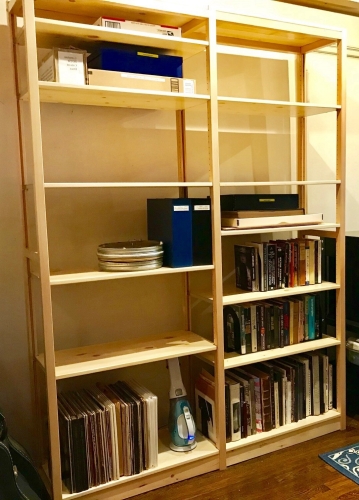
Image above has a combination of Unfinished and Clear Finish Lundia solid wood components


Frame Assembly Components

Frame Assembly Rails

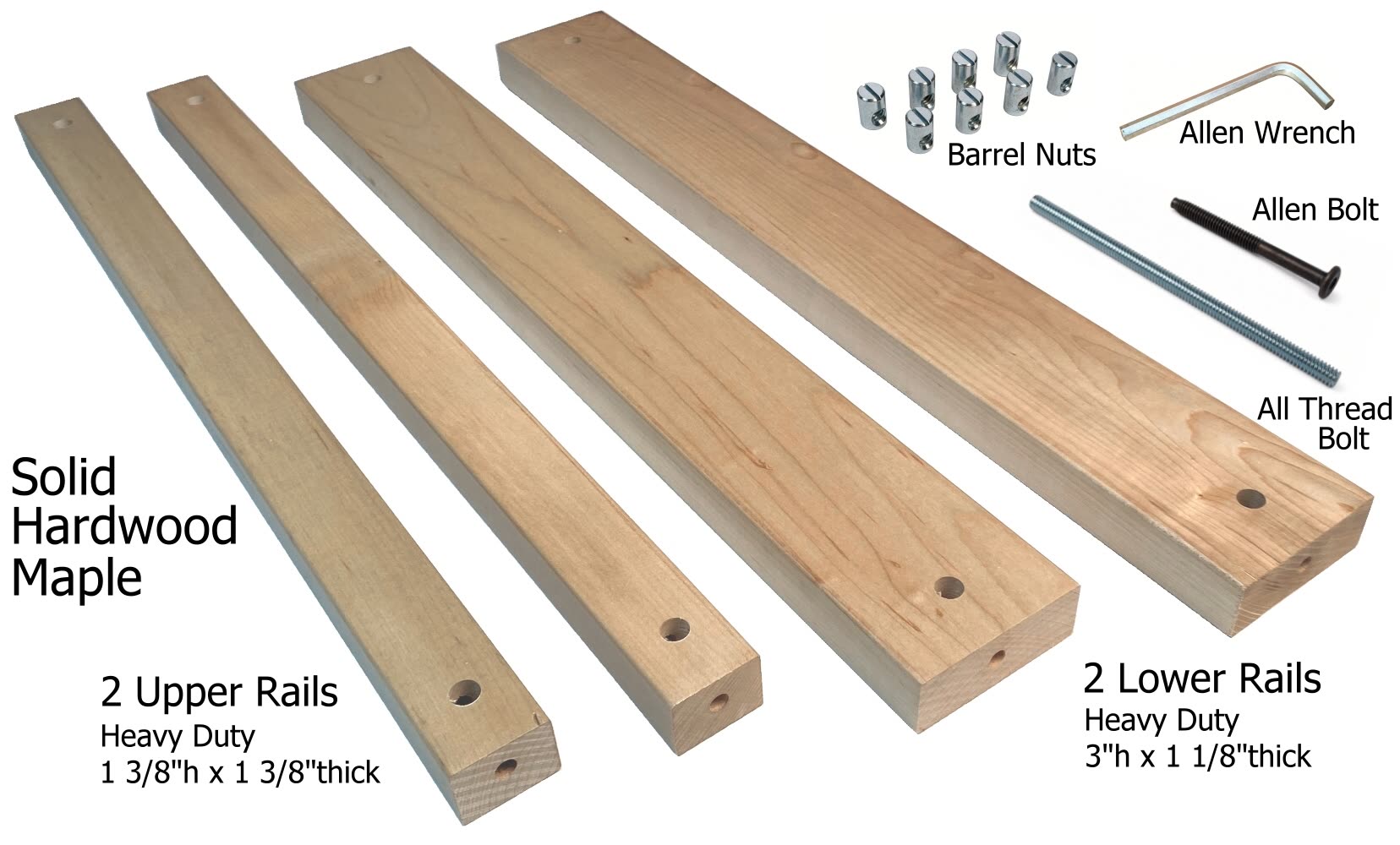
Frame assembly cross rails in solid hardwood maple: 2 upper rails, 2 lower rails, barrel nuts, bolts and Allen wrench

Frame Uprights

Solid hardwood maple upright with mortise and tenon joints, pin holes drilled in 1 inch increments, and holes for bolting assembly rails

Starter Frames & Add On Frames Size Details

Both Open Ends

Starter Frame
Both Open Ends
A 24" frame would be 25 1/4"

One Open, One Closed

Starter Frame
One Open, One Closed End
A 24" frame would be 25 7/8"

Both Closed Ends

Starter Frame
Both Closed Ends
A 24" frame would be 26 3/8"

Add-On Open End

Add On Frame
Open End
A 24" frame would be 24"

Add-On Closed End

Add On Frame
Closed End
A 24" frame would be 24 1/2"

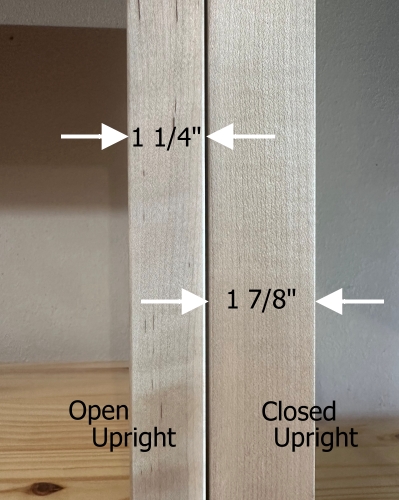
Note: Our closed end frames use a thicker upright. Open uprights are approximately 1 1/4" thick while Closed uprights are just over a half inch thicker at 1 7/8".
All sizes are approximate within 1/16" to 2/16".

Upright & Shelf Thickness Details

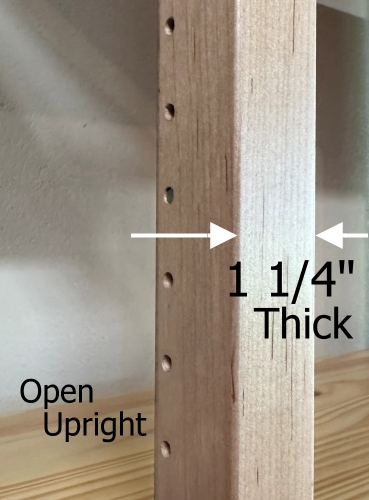
Open upright in solid maple, 1 1/4 inch thick
Open upright (1 1/4 inch) and closed upright (1 7/8 inch) side by side for comparison
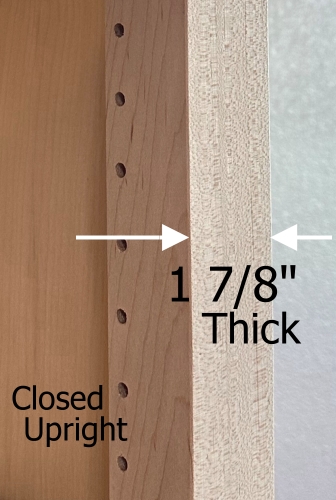
Closed upright in solid maple, 1 7/8 inch thick
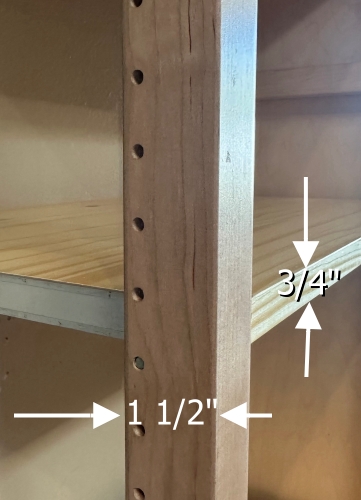
Upright stile 1 1/2 inch wide with a 3/4 inch thick solid pine shelf

It's Easy to Assemble Lundia

Lundia Ingredients Solid Maple, Solid White Pine, wood glue, soy-glued plywood, optional water-based finish. Not inside: Particle board · MDF · Melamine · Formaldehyde resin See the full list

Where We Source Our Wood

One of the New England forests in Merrimack and Hillsborough Counties where Lundia's lumber is single tree harvested
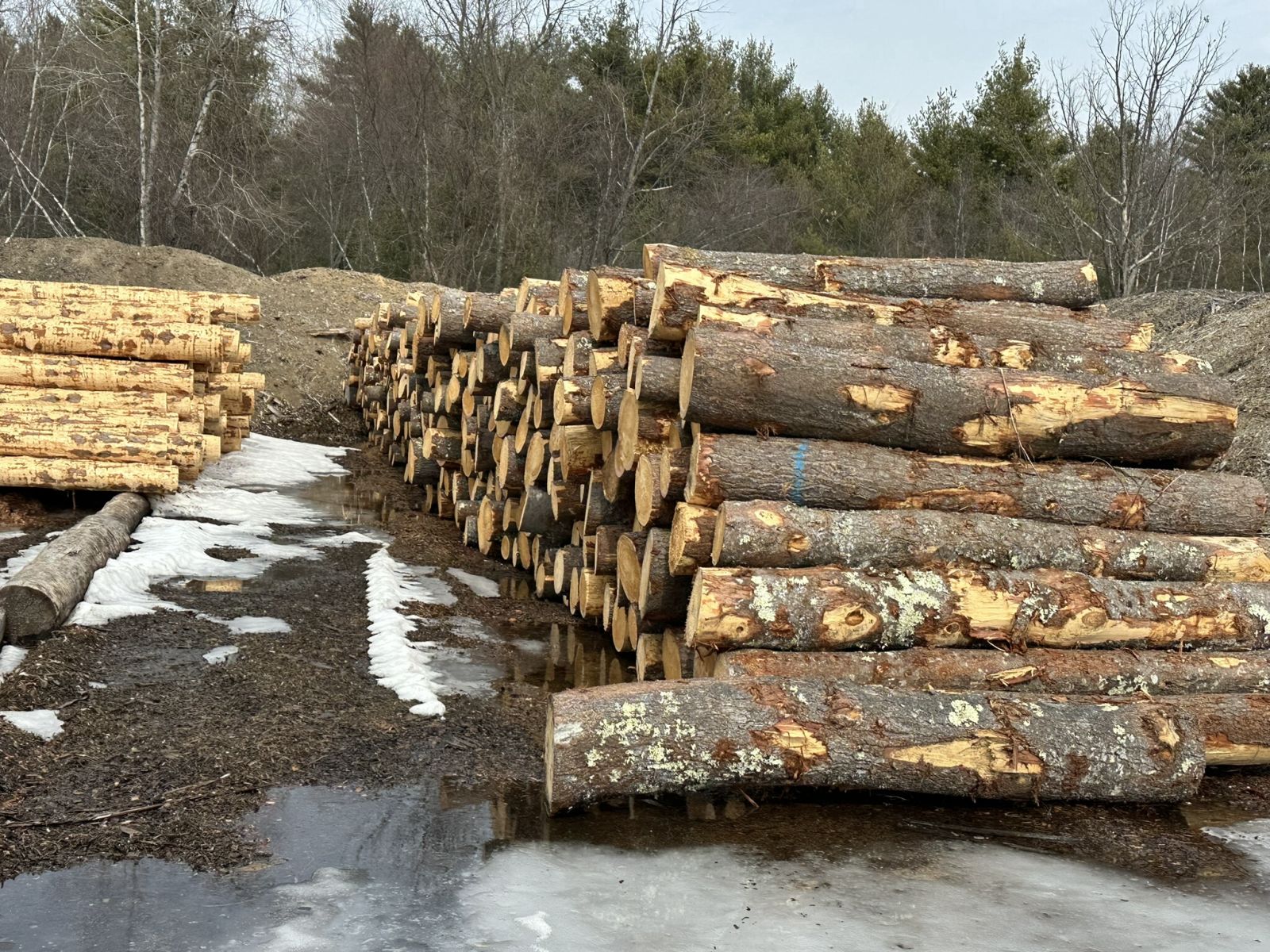
Our lumber comes from New England Forests in Merrimack and Hillsborough Counties. This photo is an actual photo of one of our forests we Single Tree Harvest from.
Freshly harvested Lundia logs waiting to be milled
This is our wood — harvested one tree at a time
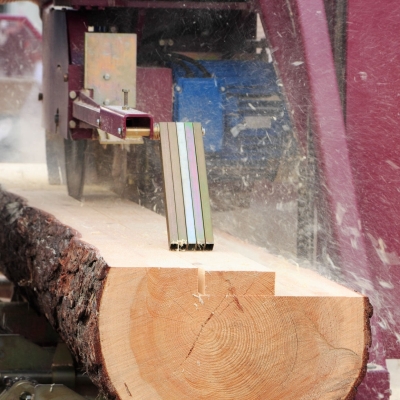
Our sawmill, turning a log into usable lumber

From the Forest to Your Closet

Two Ways to Make a Shelf

Every closet shelf starts as a tree. What happens next makes all the difference. Follow both paths, step by step, and see what really ends up in your home.

  1. 1The Raw Material
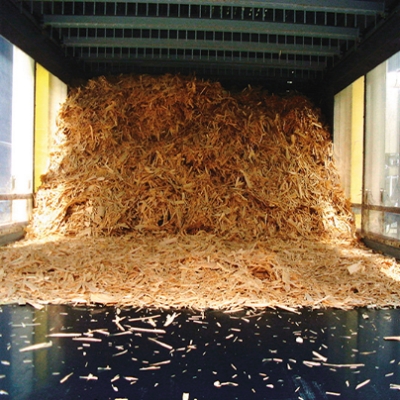
    A large pile of shredded wood particles inside a particle board plant
    Particle Board

    Shredded to Bits

    Random logs, sawmill scraps and leftover wood are shredded into tiny particles. The natural grain that gives wood its strength is gone.

    Stacks of freshly harvested logs in the woods
    Lundia Solid Wood

    Single-Tree Harvested

    These are our actual logs. Trees are selected and harvested one at a time, so the wood that reaches you starts as real, whole timber.

  2. 2Making the Board
    A large clear tube carrying formaldehyde resin into wood particles
    Particle Board

    Mixed with Formaldehyde Resin

    This is an actual 2-foot-diameter tube injecting formaldehyde resin into the wood particles. That resin is the “glue” holding particle board together, and the source of the formaldehyde fumes it can release into your home.

    A sawmill blade cutting a log into boards
    Lundia Solid Wood

    Cut & Milled

    Logs are cut and milled straight into usable boards. No shredding and no resin, just the tree’s own grain, kept whole.

  3. 3Forming the Panel
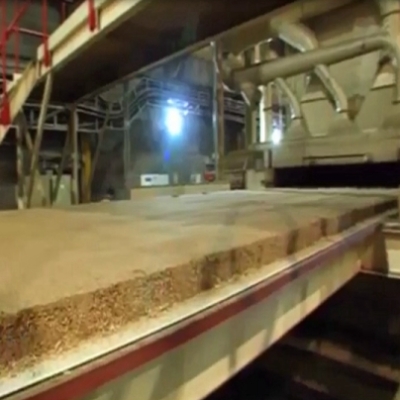
    A mat of wood chips and resin moving on a conveyor toward a heated press
    Particle Board

    “Baked” into Panels

    The mat of wood chips and formaldehyde resin is pressed under heat, essentially baked, into flat panels.

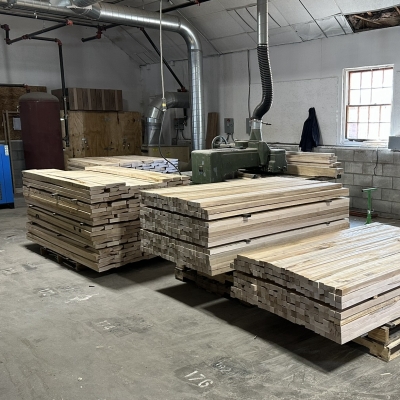
    Stacks of solid wood boards in the Lundia shop
    Lundia Solid Wood

    Ready for Our Shop

    Our actual solid wood, stacked and ready to be cut into shelves, uprights and the other solid wood components of your system.

  4. 4The Finished Shelf
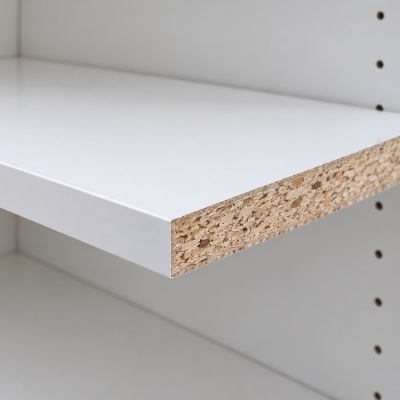
    A white laminated particle board shelf with the chip core exposed at the cut edge
    Particle Board

    A Printed Disguise

    Paper laminate and edge tape are applied to give it a printed wood-grain or solid-color finish. Underneath, it’s still wood chips and formaldehyde resin.

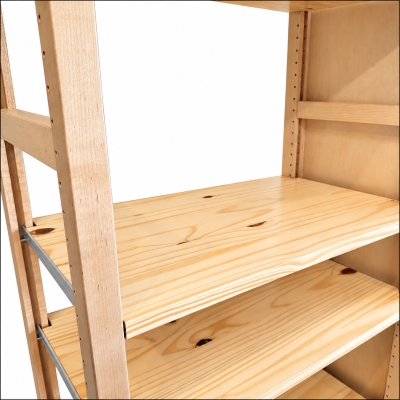
    A natural solid wood shelf supported by solid wood uprights
    Lundia Solid Wood

    Nothing to Hide

    Our natural solid wood shelf, supported by solid wood uprights. The grain you see is the real grain of the tree, all the way through.

What’s Really in the Shelf?

Particle Board
  • Shredded wood particles
  • Formaldehyde resin
  • Printed paper laminate
  • Edge tape
Lundia Solid Wood
  • Solid wood

That’s it.

Same closet. Two very different materials. Which one would you rather live with?

Design My Solid Wood Closet

About Our Solid Wood

Starter Units & Add On Units
These are assemblies that are made of solid wood "Uprights" and "Freestanding Kits". Click here to see how our units are assembled

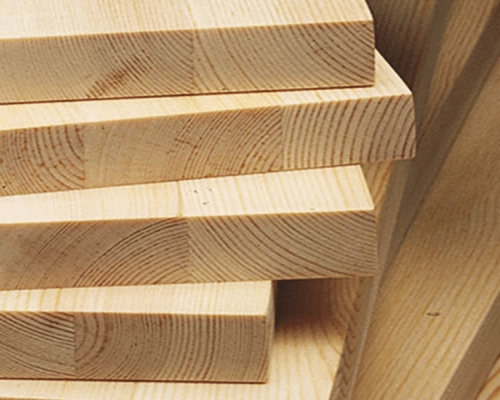
Horizontal Surfaces are made of Solid Premium White Pine (Shelves)
Actual forest locations of our sourced material are noted in Where We Source Our Wood above. Our lumber comes from Single Tree Harvest forests.

Vertical Surfaces are made of Solid Hardwood Maple (Uprights and cross rails)
Actual forest locations of our sourced material are noted in Where We Source Our Wood above. Our lumber comes from Single Tree Harvest forests.

Uprights are manufactured from clear, Solid Hardwood Maple. Two 1-1/4" x 1-1/2" stiles have a 3/8" wide x 5/8" deep plow the entire height to receive shelf end channels and are drilled with 3/16" diameter holes on 1" centers to allow for shelf adjustability. Stiles are locked together with two or more cross members mortised into the stiles. All components are machined smooth with all outside corners eased. Uprights are available unfinished or in clear water based lacquer or select tinted or painted water based finishes.

Shelves are manufactured of approximately 3/4" solid select premium white pine. All shelf materials are machined to accept formed aluminum extrusions shaped to fit into a routed slot on the end of the shelf and to rest on the shelf support pins. Shelves are available unfinished or in clear water based lacquer or select tinted or painted water based finishes.

Cross Rails (Freestanding Kits) are manufactured from Solid Hardwood Maple. This kit includes 4 rails and hardware: 2 heavy duty upper rails (approx. 1 3/8" high x 1 3/8" thick) and 2 heavy duty lower rails (approx. 3" high x 1 1/8" thick). The two lower rails connect the uprights at the bottom and the two upper rails connect at the top to create a Starter Frame or Add On Frame. Bolts and special embedded barrel nuts are used to securely bolt frames together. A simple "Allen" wrench is all that is needed to bolt the rails to the uprights (Allen wrench is included).

About our Solid Lumber:
We have used Pine as our primary wood source for over 75 years (All worldwide locations use solid pine). We have recently made a major upgrade to hardwood maple and higher grade premium white pine. Both are considered among the most sustainable woods in the world as they are some of the fastest growing and most readily available wood sources.

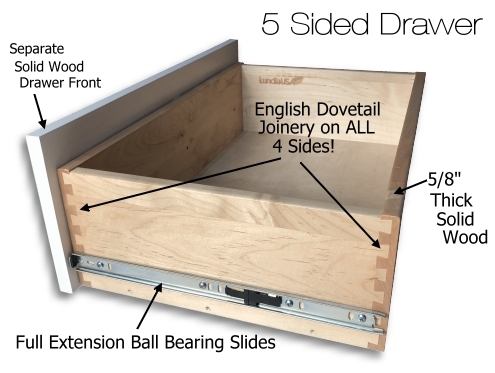
Solid Maple is used in our drawers. This wood is considerably more expensive but needed to hold our very detailed and precise English Dovetail joinery on all four corners (See image below).
Factory Pine Production

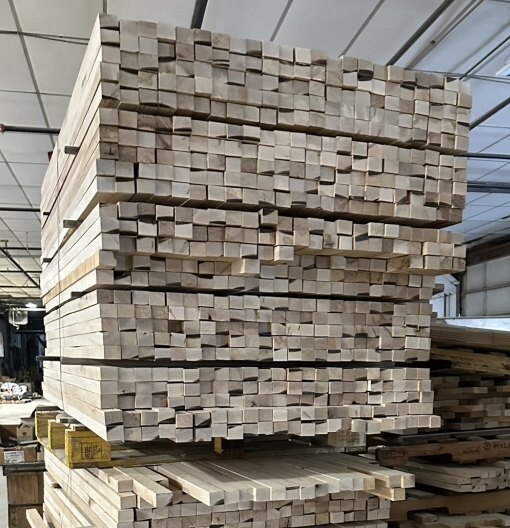
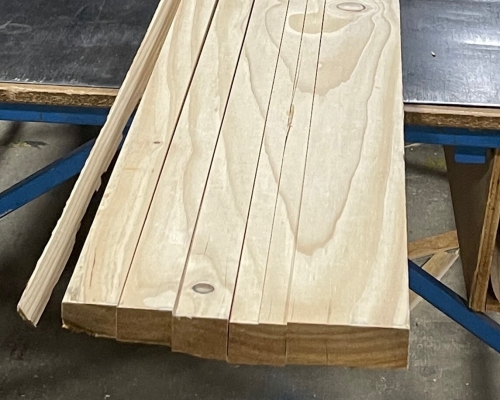
This is our actual raw material

Factory Production View

White Pine Shelves in Production

Hemlock Inventory

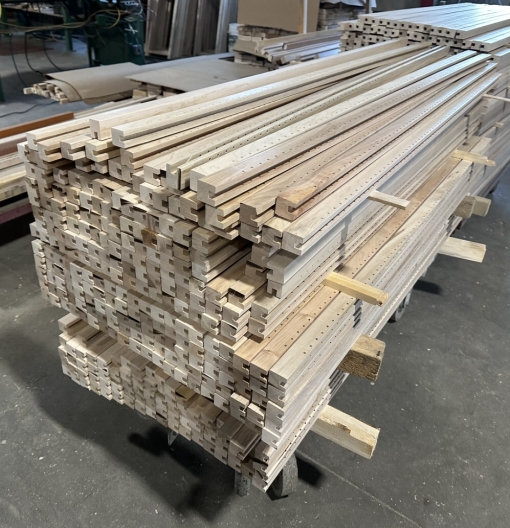
Maple Upright Stiles in Production

We manufacture with solid hardwood maple and premium white pine. All vertical surfaces are made out of solid hardwood maple (Uprights and cross rails) and all horizontal surfaces are made out of solid white pine.

Any knots in pine are sanded and filled if needed for a smooth finish. Our drawers are made out of solid maple (Maple is considerably more expensive, but needed to hold our intricate English dovetail joinery).

Uprights in Production 1
Uprights in Production 2

Lundia Solid Wood Upright Stiles in Production


Drawers

Drawer Details
Drawer Build Image

Our drawers are made of 5/8" thick solid wood sides (4 sides) and then we have a 3/4" thick solid wood drawer front. All joints are finely crafted English Dovetail, guaranteed to last you for life. Compare our drawers — you will not find a better made drawer than ours.

Drawers
Professional cabinet or furniture makers will tell you that the hallmark of quality in ANY piece of furniture starts with the drawer. If you want to verify the quality of a wood desk or furniture piece, open the drawers and examine how the drawer box is assembled. Because drawers constantly move and take abuse, they are usually the first item to fail.

The cheapest drawers are made with butt joints or slip joints. Only the finest craftsmen use English Dovetail construction — the most durable joinery in woodworking. Some manufacturers use a combination of dovetail and butt joints. Our drawer boxes have English Dovetails at all four corners.

Next, examine how many "sides" there are. Our drawers are called a 5-sided drawer box because the drawer itself is manufactured as a separate box, then the drawer front is attached afterward. If the drawer front is the actual front of the box (as in a 4-sided drawer), joints will eventually pull apart from repeated use. Our 5-sided drawer box eliminates that problem.

Hardware Slides
We use top-of-the-line Accuride-brand ball bearing, full-suspension slides. These are commercial-rated and offer smooth closing. "Full suspension" means the entire drawer extends for full interior access (unlike cheaper slides that only open partially).


Closet Hang Bar Sets

15" Deep Hang Bar Sets

15in Hang Bar Details
15in Hang Bar Parts
15in Hang Bar Full View

Our 15" deep Hang Bar Rails include a center position for smaller pant hangers with clips.


18" Deep Hang Bar Sets

18in Hang Bar Detail
18in Hang Bar Set
18in Hang Bar Full View

24" Deep Hang Bar Sets

Use 24" deep when you want to add doors in front of hanging clothes

24in Hang Bar 2 Rails
24in Hang Bar Parts
24in Hang Bar Full View

Doors

Door Specifications & Details

Door Edge Detail

Fine woodworking joinery/construction on all doors. Doors are 7/8" thick

Door Construction

Doors are hand assembled


Closet Materials 101

Know What Your Closet Is Really Made Of

Most closet companies never tell you what’s inside their shelves. Here are the five materials used in closets and shelving today, from the most processed to the most natural, so you know exactly what to ask before you buy.

1

Particle Board

Wood chips and sawdust, glued with resin and pressed into a panel

Made from
Wood chips & sawdust
Formaldehyde-based glue
Usually
Real wood surface
No
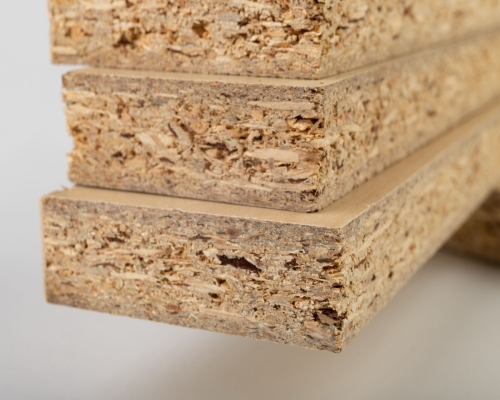
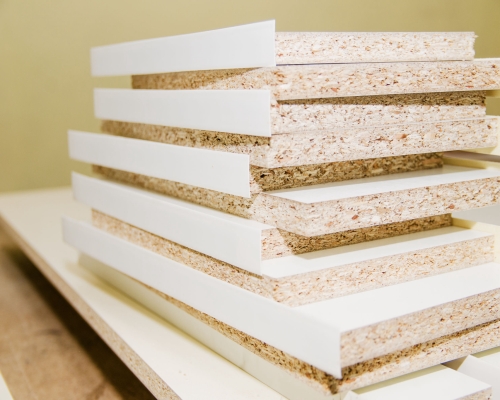
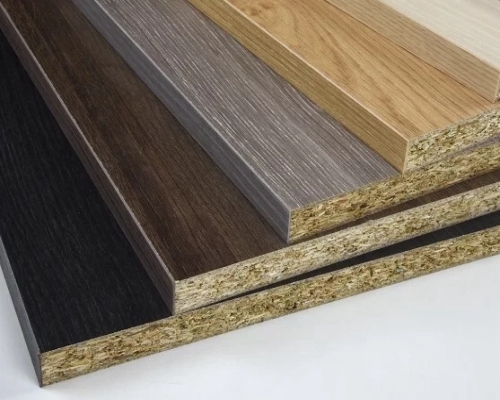
Stacked particle board panels showing the chip core

What it is

Thousands of wood chips, shavings and sawdust are mixed with resin glue, usually urea-formaldehyde, then pressed under heat into a flat panel. It’s the least expensive way to make a “wood” panel.

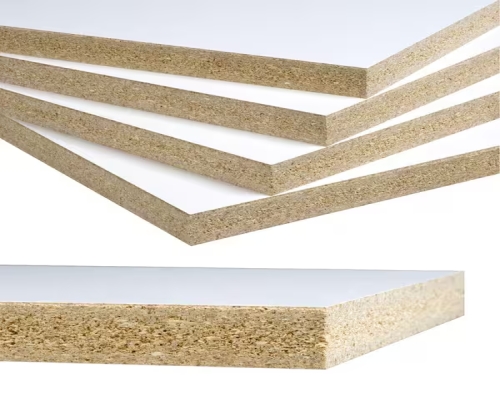
Stack of white-covered particle board shelves

Where you’ll find it

Particle board is the hidden core of most melamine closet systems, flat-pack furniture and budget shelving. Once it’s covered, you only see the chips at a cut or chipped edge.

Close-up of a particle board panel edge

Good to know

It sags under weight over time, swells if it gets wet, and screws strip out easily. Federal and California rules allow particle board to give off up to 0.09 ppm of formaldehyde.

2

Melamine

Particle board (or MDF) wrapped in printed, resin-soaked paper

Made from
Particle board or MDF core
Formaldehyde-based glue
Yes, core & surface
Real wood surface
No, printed paper
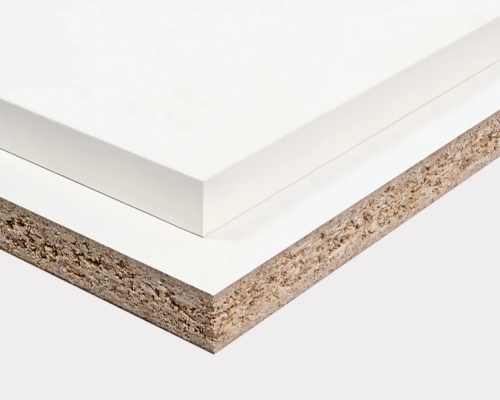
White melamine panels with particle board edges

What it is

Melamine is particle board or MDF with a decorative paper fused to its faces. The paper is soaked in melamine-formaldehyde resin and pressed on under heat, creating a hard, plastic-like surface.

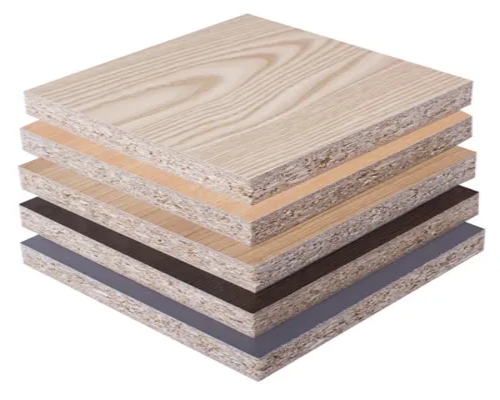
Stack of melamine panels in wood-grain and solid colors

Where you’ll find it

Melamine is the standard material in laminated closet systems, including those sold by California Closets, Closets by Design, Closet World, The Container Store, IKEA, ClosetMaid and Home Depot.

Wood-grain melamine shelves with particle board showing at the edges

Good to know

The “wood grain” is a photograph printed on paper. It can’t be sanded or refinished, and once the surface or edge tape chips, the particle board underneath is exposed.

3

MDF

Medium-density fiberboard: wood fibers and resin pressed into a dense, smooth panel

Made from
Fine wood fibers
Formaldehyde-based glue
Usually
Real wood surface
No, unless veneered
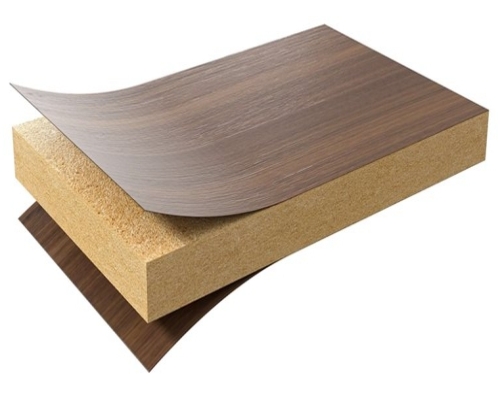
A wood-grain covering being applied to a fiberboard panel

What it is

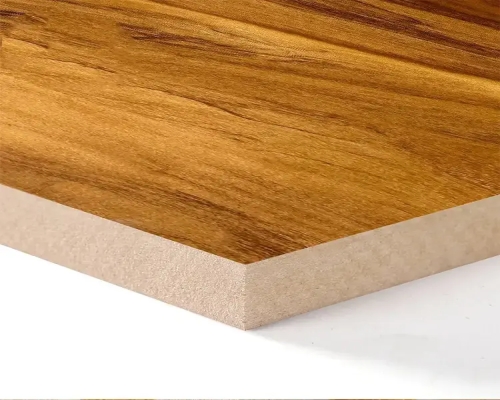
MDF is made by breaking wood down into fine fibers, mixing them with resin and pressing them into a dense panel. It’s smoother and stronger than particle board, with no visible chips.

MDF panel with a wood-grain surface

Where you’ll find it

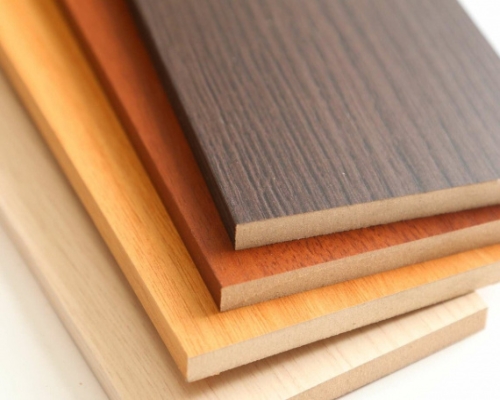
Because it machines and paints cleanly, MDF is popular for cabinet doors, painted trim and furniture. It’s usually covered with melamine paper, plastic laminate (HPL) or a thin wood veneer.

Stacked MDF panels in several laminate colors

Good to know

Finer fibers need more glue to hold together, so rules allow MDF a higher formaldehyde limit than particle board (0.11 ppm). It’s also very heavy and swells if it gets wet.

4

Plywood

Thin sheets of real wood, glued together in cross-grain layers

Made from
Thin wood veneers
Formaldehyde-based glue
Often
Real wood surface
Yes, a thin veneer
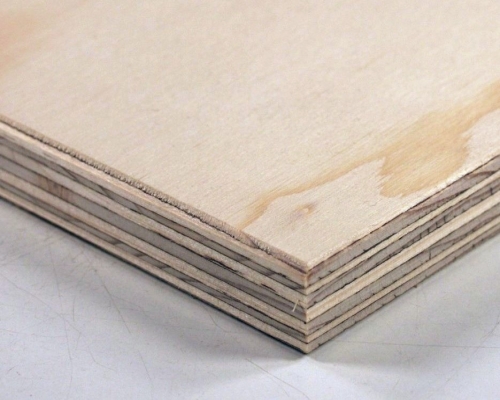
Plywood edge showing its glued layers

What it is

Plywood is thin sheets of real wood (veneers) glued together, with the grain of each layer turned crosswise for strength. Quality varies with the wood, the number of layers and the glue used.

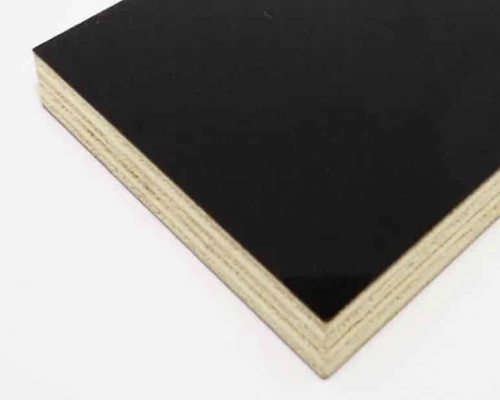
Plywood panel with a black surface

Where you’ll find it

Plywood is the go-to panel for quality custom cabinetry and is generally considered the best manufactured panel. The face you see is real wood, but often a very thin veneer.

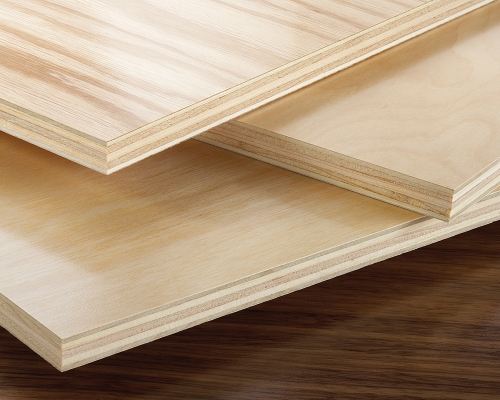
Stacked plywood sheets

Good to know

Standard hardwood plywood glue usually contains formaldehyde, though at a lower limit than particle board (0.05 ppm). Soy-based and other no-added-formaldehyde plywoods cost more.

5

Solid Wood

Lumber cut directly from the tree. No chips, no fibers, no resin core.

Made from
Real lumber
Formaldehyde-based glue
No formaldehyde glue or resins
Real wood surface
Yes, all the way through
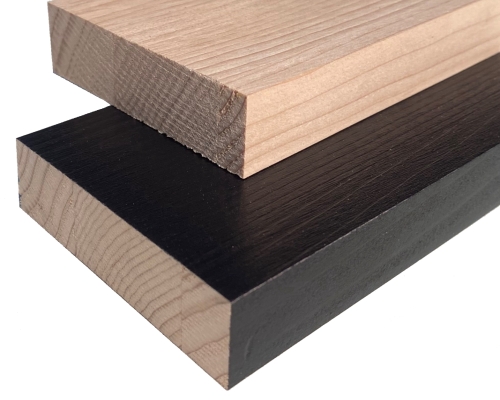
Solid wood boards in natural and dark finishes

What it is

Solid wood is cut straight from the log, milled to thickness and planed smooth. (That’s why a 2×4 is really 1½″ thick: it’s named for its rough size before planing.) The wood you see goes all the way through.

Stacked solid wood boards

Where you’ll find it

Solid wood is what Lundia USA has used for over half a century. It takes far more skilled labor: a frame that needs 4 pieces in melamine takes 14 separate solid wood parts.

Lundia solid wood boards in the shop

Good to know

Scratches and dents can be sanded out, it can be refinished in a new color years later, and it holds screws for decades. The grain is real, not printed, and there’s no resin core to give off fumes.

The Bottom Line

Particle board, melamine and MDF all start as ground-up wood held together with resin. Plywood is a step up, but its glue usually still contains formaldehyde. Only solid wood is real wood all the way through, with no resin core.

Formaldehyde limits shown are the EPA TSCA Title VI / California CARB Phase 2 emission standards for composite wood products.

Shelf with 500lbs

Click image for a larger view

Our 24" wide Solid Wood Shelf with 500 lbs of weight.

Notice there is still NO deflection in the shelf. Compare the line of the yellow string to the shelf edge — they remain parallel.

NO DEFLECTION

IMPORTANT: We do not guarantee weight capacity or deflection limits. This demonstration gives a general idea only. Because wood is a natural material, individual shelves may react differently.

Shelf Strength Demonstration

Be Informed