Here is what actually happens between a standing tree and the solid wood closet or shelving system that arrives at your door.
It starts with the tree — and our sawmill
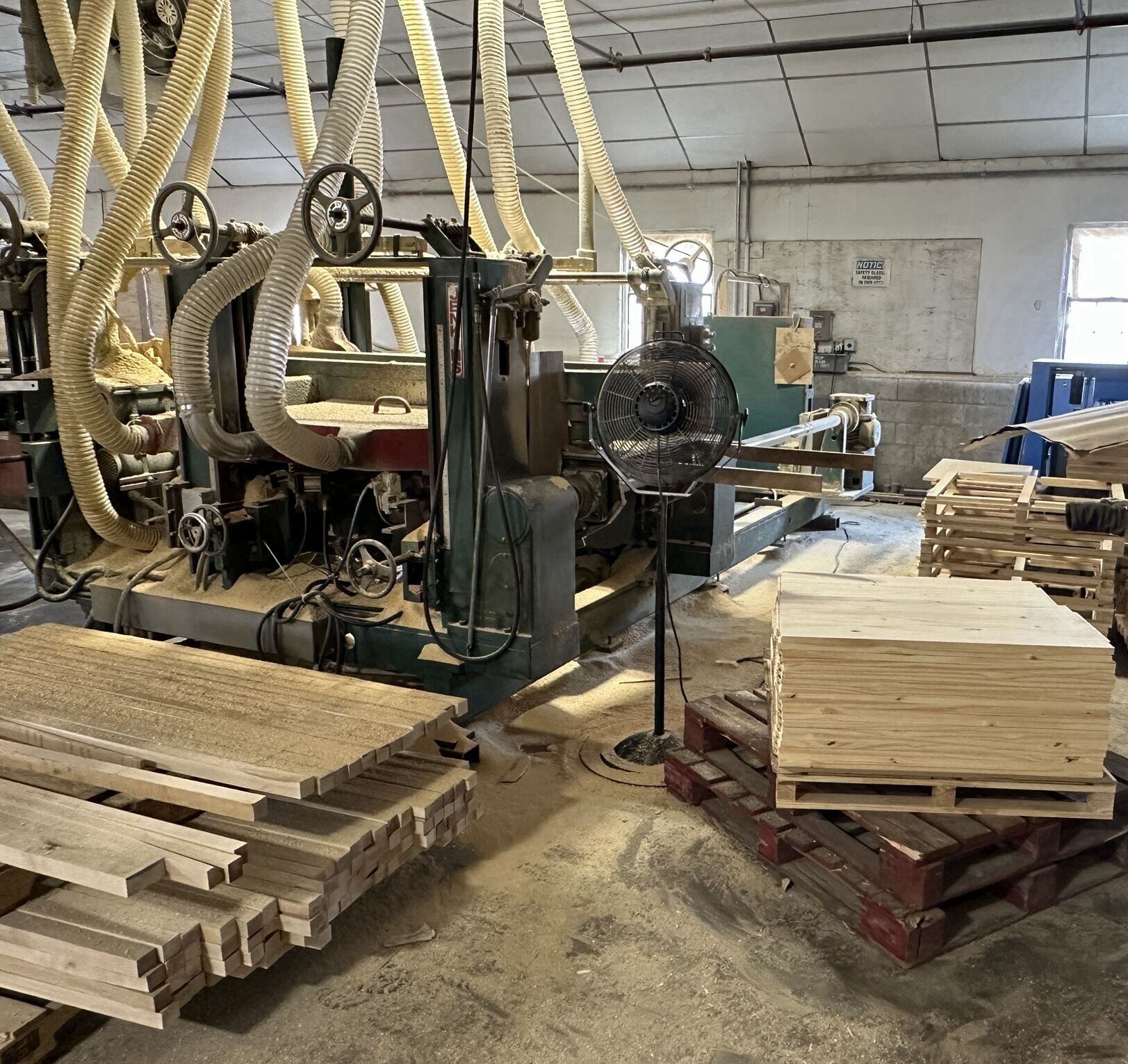
We single tree harvest our own wood. Trees are selected and taken one at a time, then milled at our sawmill — so we control the lumber from the moment it comes down to the moment it becomes a shelf or an upright.
That is the opposite of how most closet companies buy material. There is no particle board here, no rubberwood, no formaldehyde — just real, solid American hardwood and premium softwood that we cut ourselves.

Where a closet actually begins
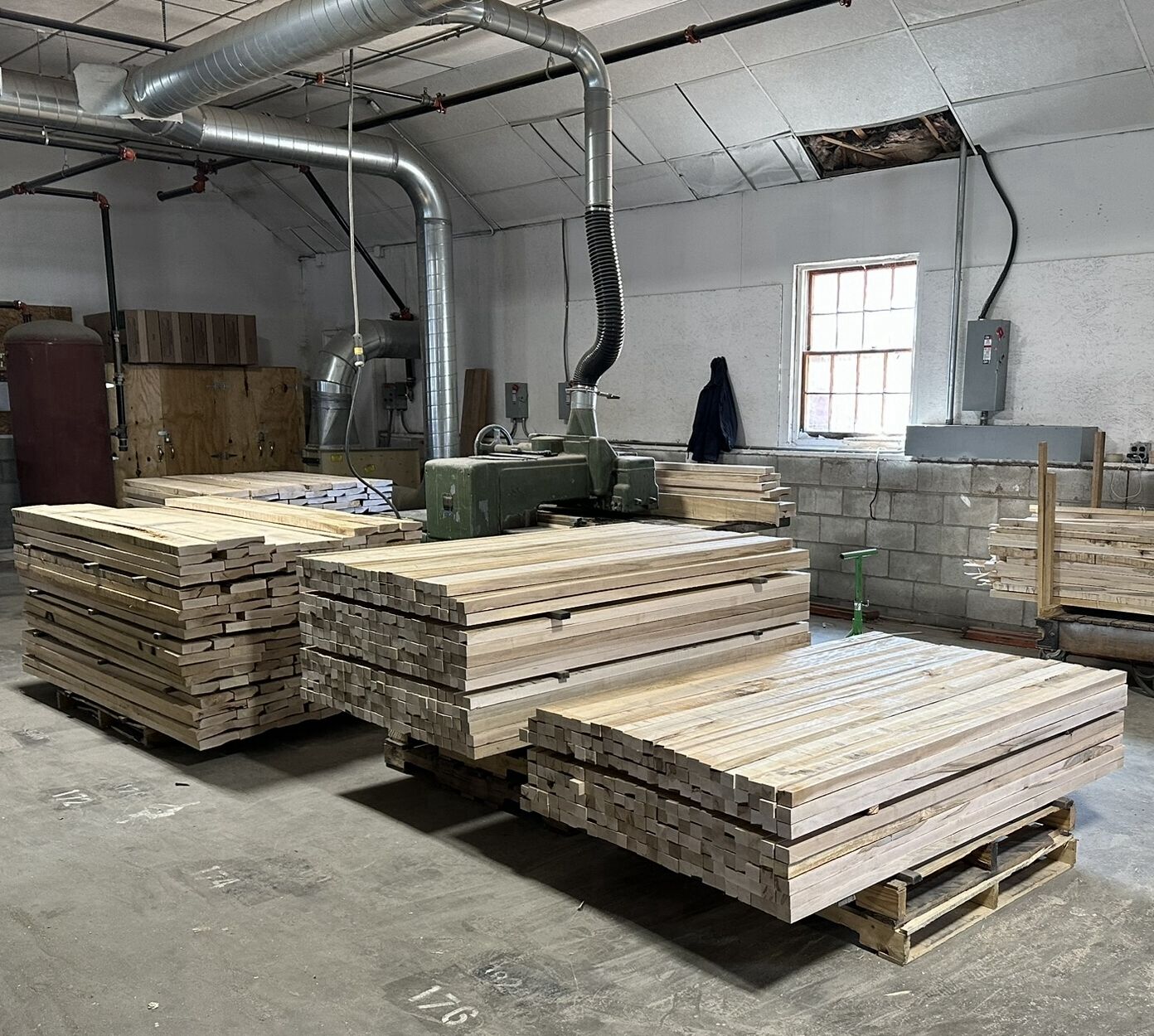
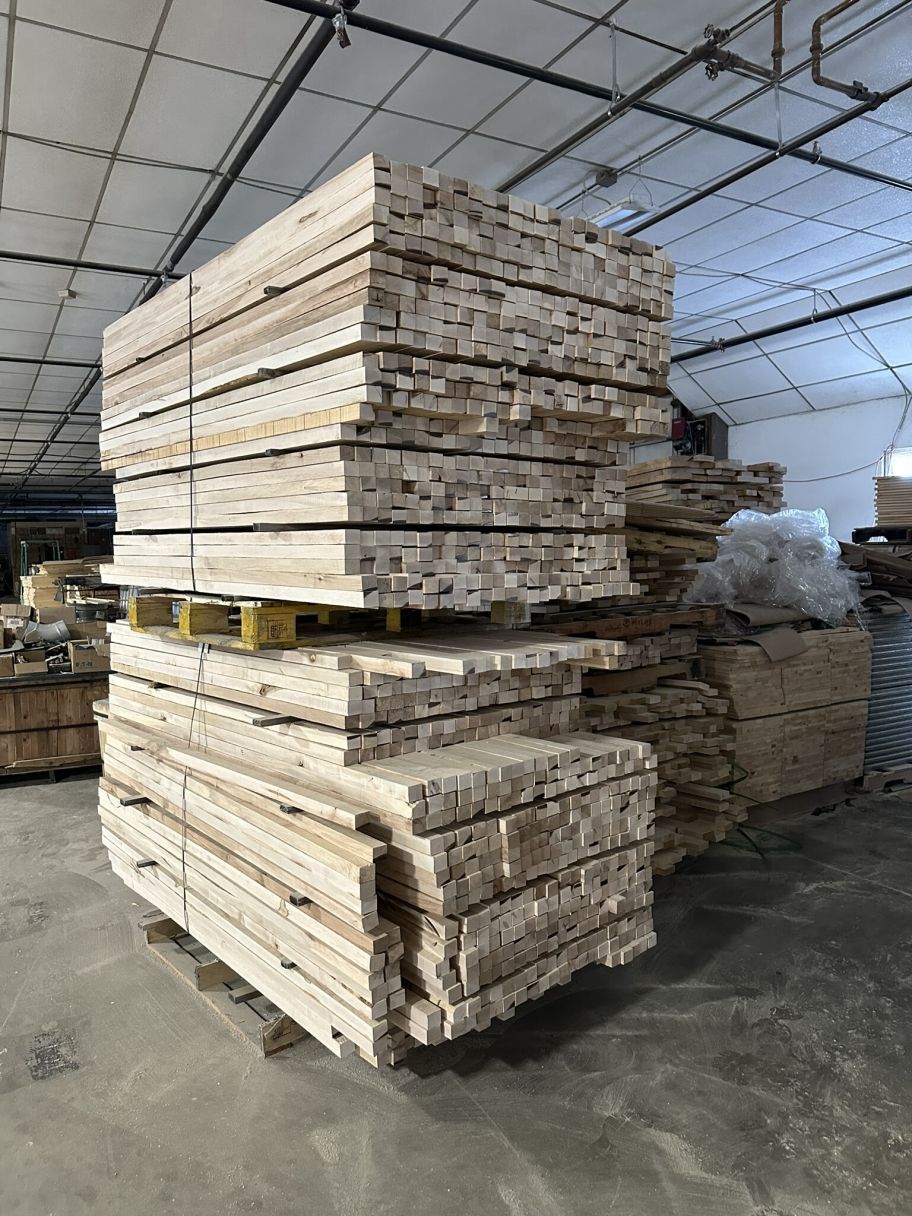
Milled lumber becomes components. Uprights and stiles are cut, sized and machined in our own plant — the structural backbone that every shelf, drawer and hangrod in your closet will eventually hang from.
Every one of these parts is solid wood all the way through. Cut one in half and it looks the same in the middle as it does on the face.
Mortise and tenon — not staples, not cam locks
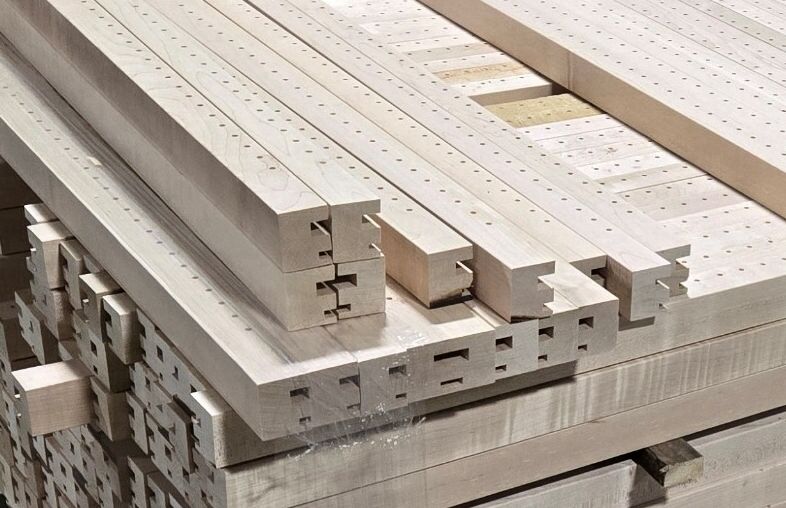
This is the part that takes the time. Real solid wood has to be worked, and the detail in a single upright is slow, exacting and impossible to rush.
Our uprights are all assembled with mortise and tenon joints — the same joinery used in fine furniture for centuries. It is something you would never see from any other closet manufacturer, because it costs time that a particle board shop simply will not spend.
Over 160 holes in a single upright
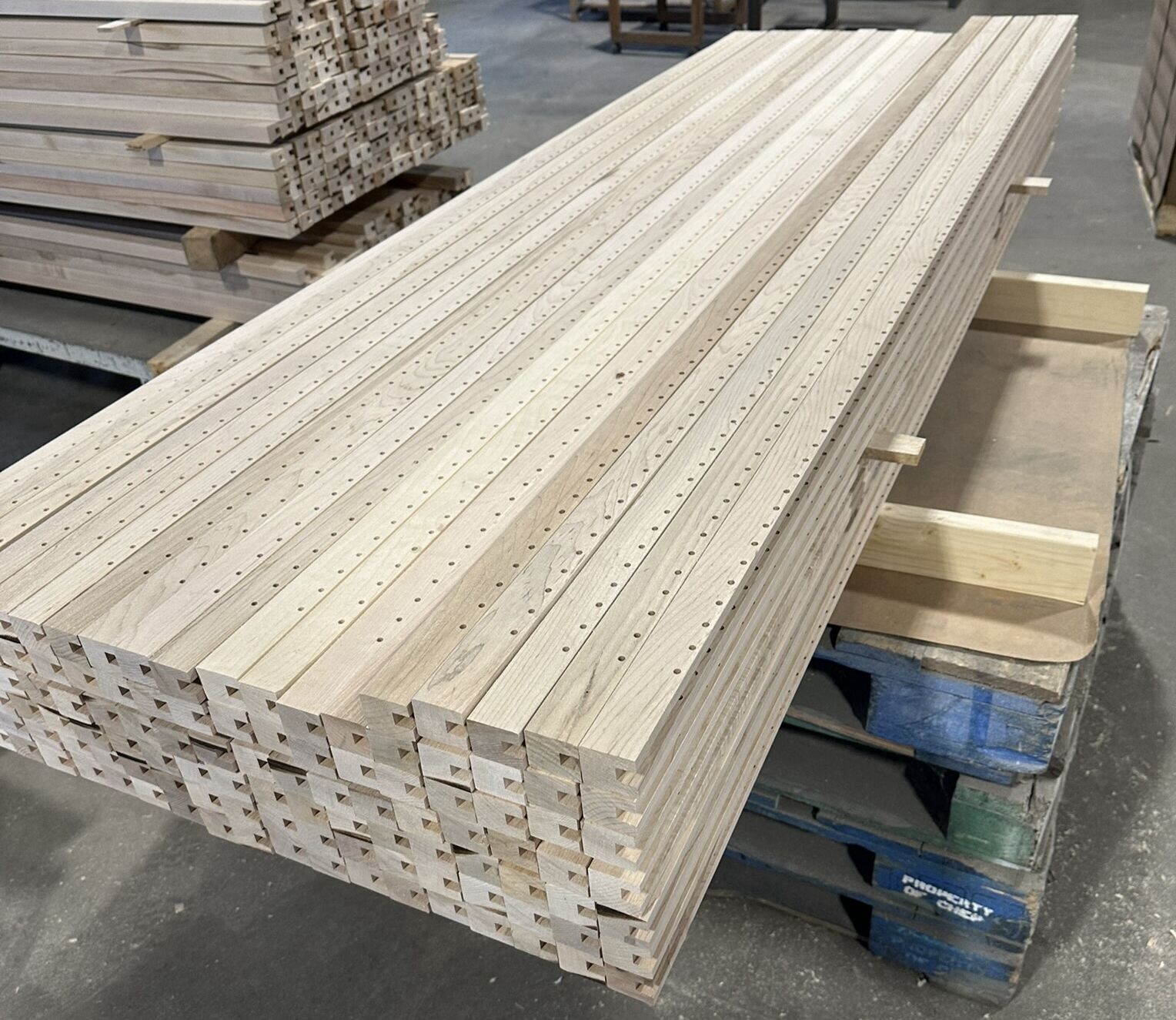
Before an upright is ever assembled, it may require over 160 holes drilled into hardwood Maple. Every one of them has to land in exactly the right place, because those holes are what make the system adjustable and what let your shelves move wherever you need them.
Hard maple does not forgive a mistake. There is no filler, no edgebanding and no second chance — the part is either right or it is firewood.
Three steps, or forty?
Manufacturing in real solid wood is genuinely difficult, and a shelf is the clearest example. A single melamine shelf built by our competition can be made in as little as three steps.
It takes over forty separate steps to make a single solid wood shelf — but it will last forever.
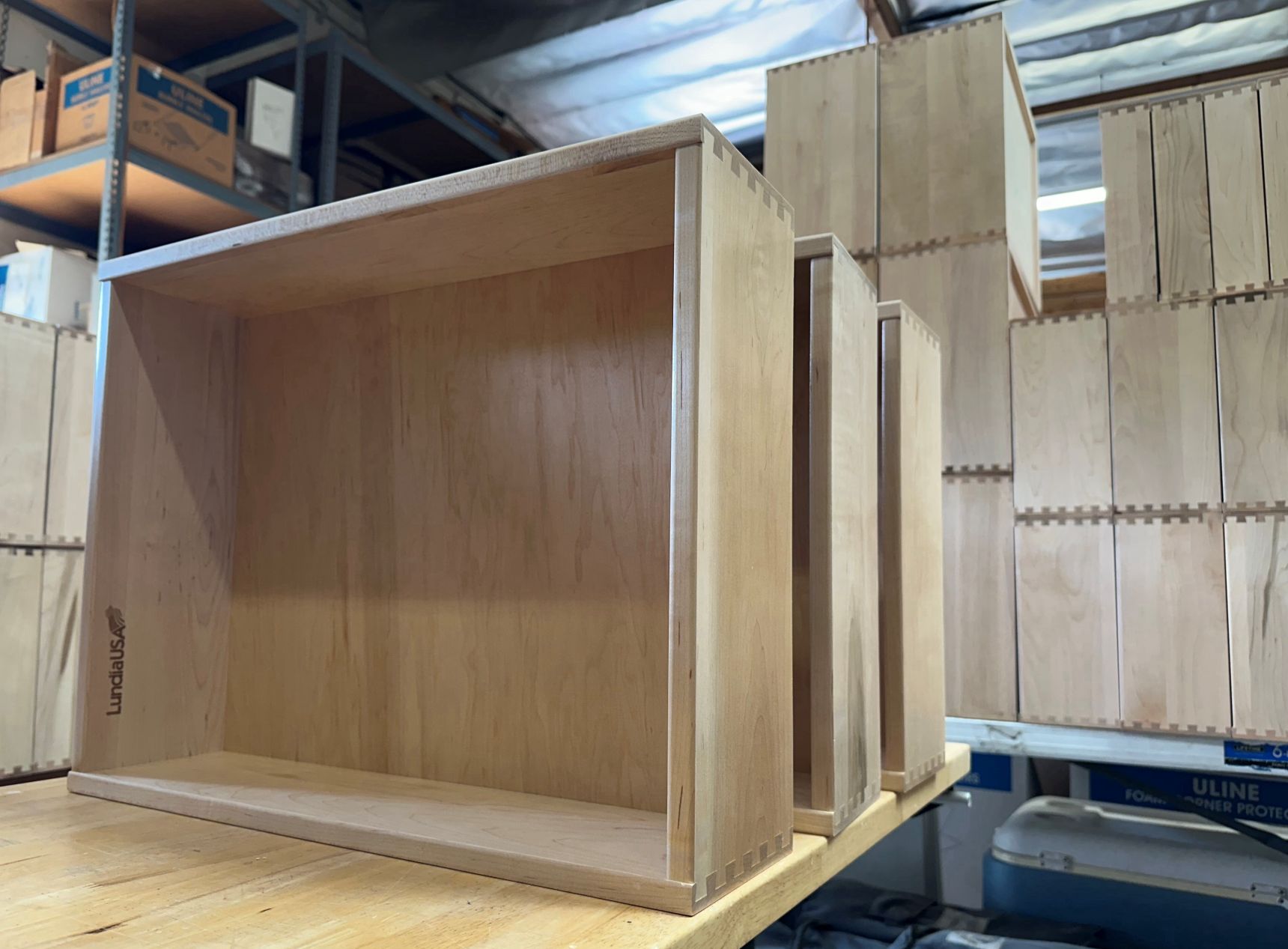
English dovetails on all four corners
Our drawers are built with English Dovetail construction on all four corners and thick solid wood throughout — sides, backs and bottoms.
A dovetailed corner cannot pull apart the way a stapled or doweled box does. Loaded heavy, opened and closed for decades, it simply stays together. Truly built to last a lifetime.
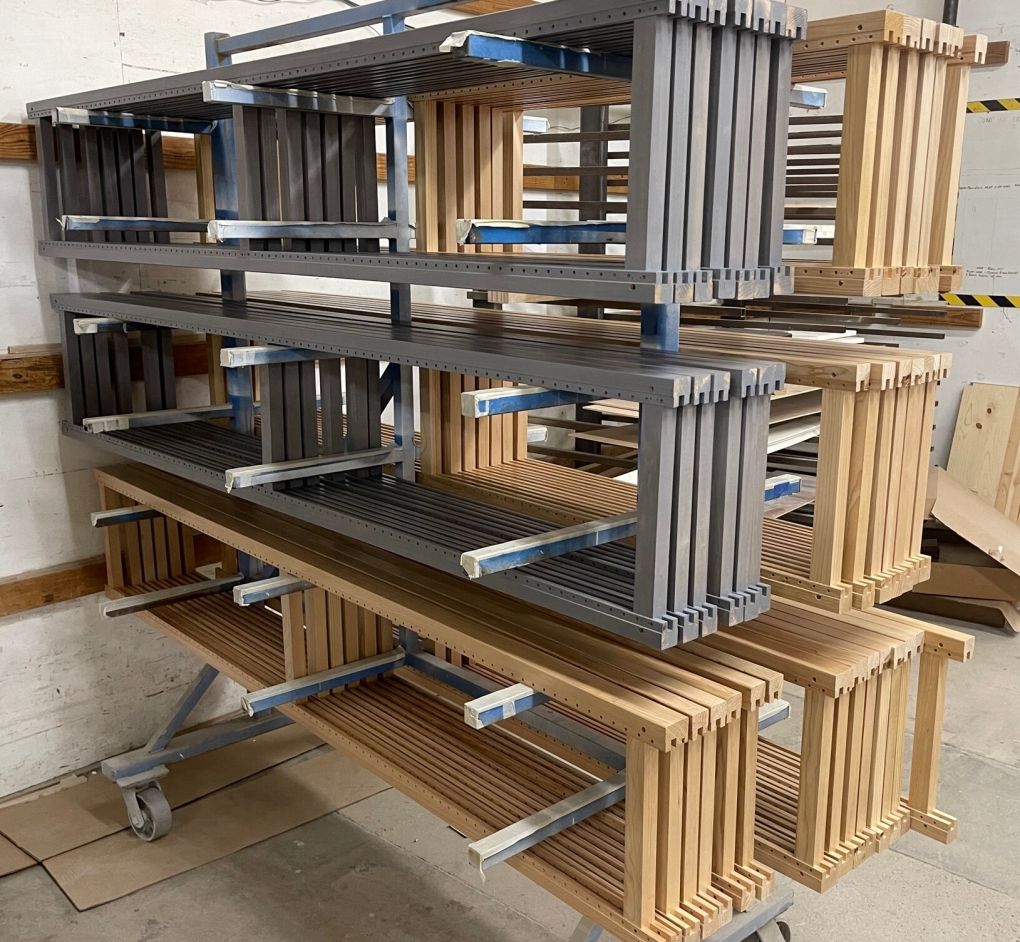
Finished by hand, by people who know wood
Every single part has to be finished, and that takes skilled labor — not a machine. Uprights, shelves, drawer fronts and every piece of trim are handled individually, and we finish them with LOW VOC finishes so what arrives in your home is as clean as the wood it started as.
The scale of that work is hard to picture until you count the parts. A typical 8' wide melamine reach-in closet requires fewer than 38 cut parts to create, most of them produced on a CNC machine. The same 8' wide closet in solid wood requires nearly 130 separate individual cut parts, using skilled labor and heavy woodworking machinery.
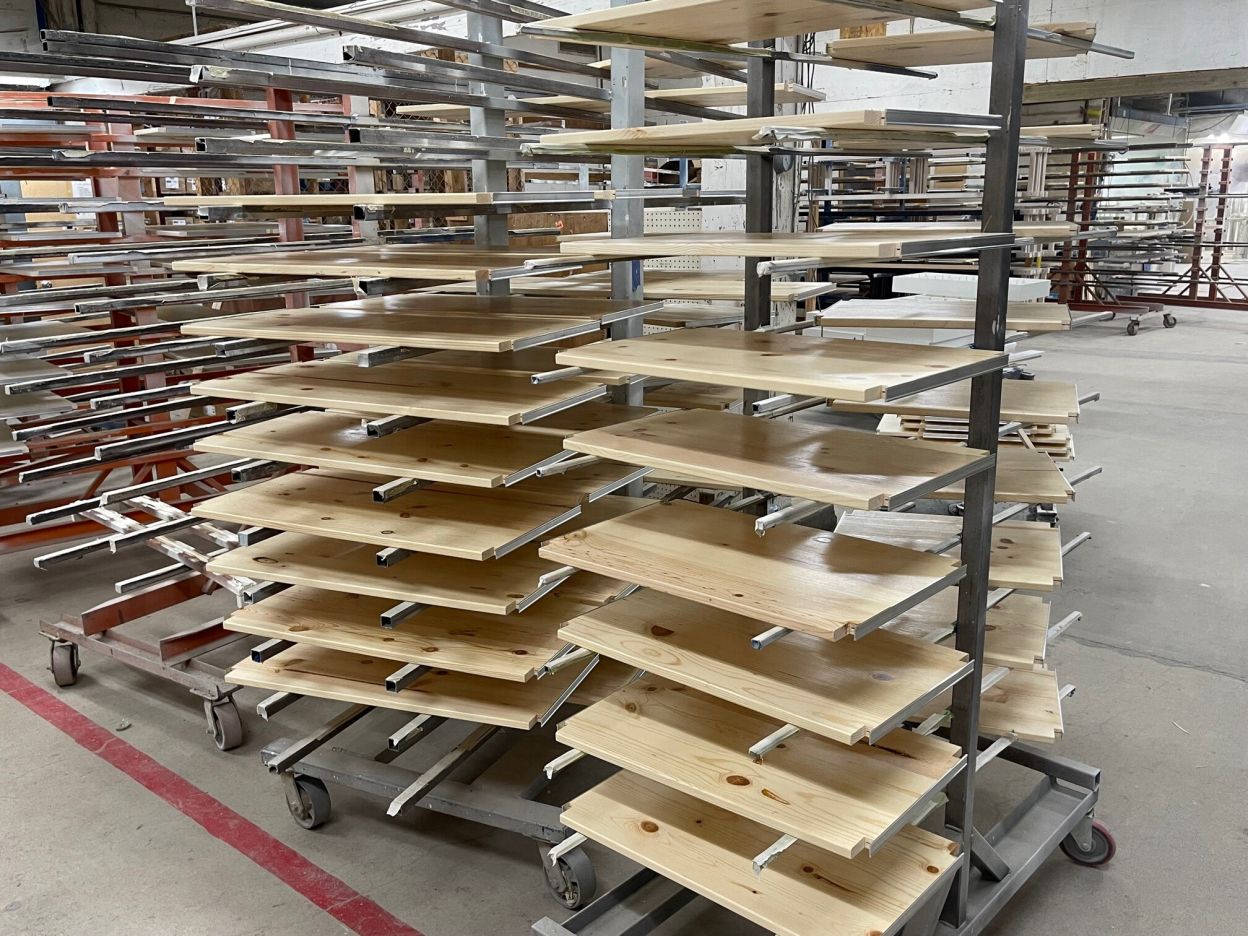
That is the whole difference. Roughly three and a half times the parts, forty times the steps on a single shelf, and joinery you will not find anywhere else in this industry — because we are still building closets the way furniture used to be built.


